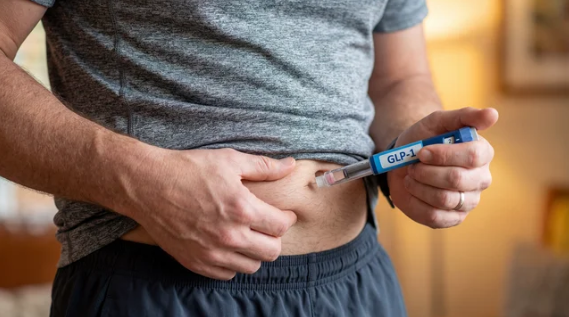
The most commonly recommended areas include locations with enough fatty tissue to support proper subcutaneous absorption. These spots are easy to access and help ensure consistent delivery of the medication.
The best areas include:
- Abdomen (most common)
- Thighs (front of upper leg)
- Upper arms (back of arm)The abdomen is typically the preferred option because it allows for the most consistent absorption. Many people find this area easier to use daily, especially when following a routine outlined in a structured program.
Rotating between injection locations is important to prevent irritation, bruising, or tissue buildup over time. Keeping injections spaced out also helps maintain consistent results, which you can see more clearly when looking at real progress in our
GLP-1 injection results guide.
Where you inject plays a direct role in how well the medication is absorbed and how consistent your results are. Most providers recommend using areas with a stable layer of fat and avoiding muscle or overly lean sections.
The abdomen is often considered the most reliable option because it provides steady absorption. Injections should be placed at least a few inches away from the belly button and rotated across different spots in that area.
Thigh injections are another common option, especially for those who prefer a more comfortable or less sensitive location. The front of the upper thigh is typically used, avoiding the inner thigh where sensitivity is higher.
Upper arm injections can also be effective, but they may require assistance depending on flexibility and comfort. This option is less commonly used compared to the abdomen and thighs.
No matter which area you choose, consistency matters. Following a structured schedule and proper placement helps maintain steady progress, which ties directly into how often you inject, as outlined in our
GLP-1 injection frequency guide.
Rotating injection areas is essential to prevent irritation, lumps, or reduced absorption over time. Using the same exact spot repeatedly can lead to tissue buildup, which may impact how well the medication works.
A simple rotation method is to divide each area into sections. For example, if using the abdomen, rotate between different spots on the left and right side rather than injecting in the same place every time.
Many people follow a pattern such as:
- Left abdomen → right abdomen
- Left thigh → right thigh
- Rotate weekly or per injectionKeeping injections spaced at least an inch apart helps reduce irritation and allows the skin to recover. This becomes especially important when following a consistent dosing schedule. If you are still learning proper technique from start to finish, our
how to inject GLP-1 guide walks through each step in detail so you can build confidence before your first dose.
Proper rotation also helps maintain more predictable outcomes, which you can better understand by reviewing real transformations in our
GLP-1 injection before and after guide.
Injection location can influence how consistently the medication is absorbed, but the overall effectiveness depends more on proper dosing, routine, and program structure.
The abdomen tends to provide the most stable absorption, which is why it’s commonly recommended as the primary option. Other areas like the thighs or upper arms can still be effective, but absorption may vary slightly depending on body composition.
What matters most is consistency. Using proper technique, rotating locations, and sticking to a regular schedule will have a bigger impact than the exact spot used.
Minor differences in absorption can still play a role in how quickly results appear, especially in the early stages. This is why following a structured plan is key, particularly when considering overall expectations and timelines outlined in our
GLP-1 injection results guide.